Request a Free Estimate
We don't just manage your pond or lake; we transform it into a beautiful, thriving ecosystem. It's what we love to do.
.jpeg?width=1600&height=900&name=FBJFJY%20(6).jpeg)
As summer heat fades and water temperatures begin to cool across North Carolina, pond owners often turn their attention to fall pond maintenance. While controlling vegetation, checking water quality, and preparing equipment for cooler weather are important, fall is also an excellent time to think about fish stocking in North Carolina.
A healthy forage base is one of the foundations of a productive fishing pond. Forage fish provide the food largemouth bass and other predators need to grow, maintain healthy body condition, and support a balanced fish population. Stocking at the right time, and with the right species, can help prepare your North Carolina pond for better fishing in the seasons ahead.
Why Fall Is a Great Time for Fish Stocking in North Carolina
Cooler fall temperatures can create favorable conditions for pond fish stocking. Fish generally experience less temperature-related stress than they would during the hottest months of a North Carolina summer, making spring and fall preferred seasons for many supplemental stocking situations.
Fall stocking can also give certain forage species an opportunity to become established before predator activity increases with warmer spring temperatures. In new or properly managed ponds, establishing prey species before introducing predators such as largemouth bass can help create a stronger foundation for the fishery.
For North Carolina pond owners interested in growing healthy bass, improving fishing, or restoring balance to an existing fish population, timing can be just as important as choosing the fish themselves.
Benefits of a Healthy Forage Base
Supports Largemouth Bass Growth: Bass require abundant prey to maintain good body condition and reach their growth potential. When forage becomes limited, competition increases and bass growth can suffer.
Promotes a Balanced Fish Population: The relationship between predator and prey species is essential to effective fisheries management. Too many predators or too little forage can contribute to an unbalanced pond.
Reduces Competition for Food: A productive forage population gives predatory fish more feeding opportunities and helps reduce pressure on limited food resources.
Builds a Foundation for Spring: Establishing appropriate forage species during cooler months can position your pond for increased biological activity as temperatures rise.
Forage Fish for North Carolina Ponds
Every pond is different, so the best stocking combination depends on factors such as pond size, existing fish populations, habitat, water quality, and your fishing goals. Several species commonly considered in North Carolina pond management include:
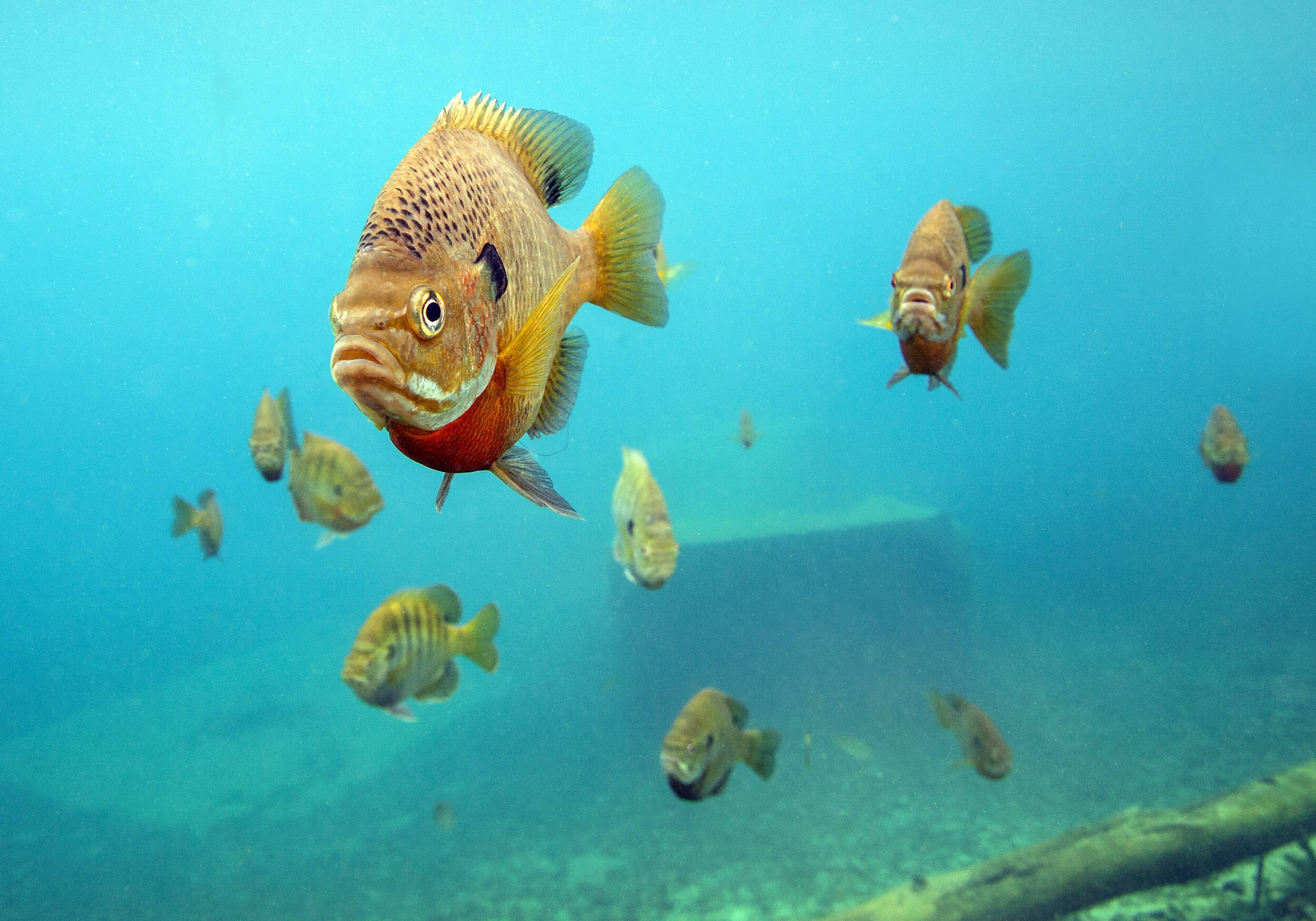
Bluegill
Bluegill are a cornerstone of many largemouth bass ponds. Their ability to reproduce and provide prey at multiple sizes makes them an important component of a balanced bass-bluegill fishery.
For new warmwater ponds, fall can be particularly important. North Carolina pond management guidance commonly recommends stocking bluegill and other appropriate sunfish before largemouth bass, allowing the forage population time to become established.
Redear Sunfish
Also known as shellcrackers, redear sunfish can complement bluegill in a North Carolina fishing pond. They add diversity to the fishery while contributing to the pond's overall forage population.
Fathead Minnows
Fathead minnows are a popular forage species because they reproduce quickly and provide readily available prey for many fish. They can be especially valuable when establishing the forage base of a new pond before predator populations become established.
Golden Shiners
Golden shiners are another high-value forage option for certain ponds and lakes. They can provide additional prey for largemouth bass and other predatory fish, but whether they are appropriate depends on the goals and existing population of the waterbody.
The key is not simply adding more fish. Successful pond stocking in North Carolina requires choosing species and stocking rates that complement the existing ecosystem.
Should You Stock an Existing Pond?
Adding fish to an established pond without first understanding its current population can create more problems than it solves.
For example, adding forage fish may provide only temporary benefits if an existing predator population consumes them before they can establish. Likewise, adding additional gamefish to a pond that already has too many predators can increase competition and make poor growth even worse.
Before supplemental stocking, a professional fisheries assessment can help determine whether the pond has an abundance or shortage of certain species and size classes.
Depending on the pond, this assessment may include fish population sampling, water quality testing, habitat evaluation, and a review of harvest records.
Don't Forget Water Quality and Habitat
Fish stocking is only one part of successful pond management in North Carolina.
Even a carefully designed stocking plan can underperform when fish lack adequate habitat or the pond has poor water quality. Dissolved oxygen, pH, alkalinity, aquatic vegetation, available spawning habitat, and overall pond productivity can all influence fish growth and survival.
A comprehensive management strategy may include:
Managing these factors together helps create an environment capable of supporting a healthy, productive fish population year after year.
North Carolina Fish Stocking Requirements
Before stocking, pond owners should also determine whether their waterbody is considered a private, self-contained pond under North Carolina regulations.
Fish stocking permits may be required for waterbodies connected to public waters or otherwise classified as inland public fishing waters. Requirements can vary based on the waterbody and species being stocked, so pond owners should verify applicable North Carolina Wildlife Resources Commission requirements before stocking.
A professional North Carolina fish stocking company can also help you understand the considerations involved and develop an appropriate stocking strategy for your property.
Why Choose Pond Lake Management?
Pond Lake Management provides professional fish stocking and fisheries management services throughout North Carolina. Our team works with private landowners, farms, HOAs, recreational properties, and other pond and lake owners to develop management programs based on the needs of each individual waterbody.
Rather than relying on a one-size-fits-all stocking recommendation, we consider your pond's size, existing fish community, habitat, water quality, and long-term goals.
Whether you want to grow larger largemouth bass, establish a new fishing pond, strengthen your forage population, or restore balance to an existing fishery, we can develop a stocking and management strategy designed around your North Carolina pond.
Schedule Fall Fish Stocking in North Carolina
A productive spring fishery starts with smart management well before spring arrives. Fall is an excellent time to evaluate your pond, identify weaknesses in the existing fish population, and determine whether supplemental stocking should be part of your management plan.
Contact Pond Lake Management today to schedule fish stocking in North Carolina or request a professional pond and fisheries assessment. We'll help you develop a science-based plan to create a healthier, more balanced pond and better fishing for seasons to come.
About Pond Lake Management — A Jones Lake Management Partner
Pond Lake Management provides comprehensive, science-based lake and pond management services across North Carolina. We deliver sustainable solutions to maintain healthy, attractive waterbodies in diverse coastal and inland environments. As a Jones Lake Management Partner, we offer a full range of services, including aquatic weed and algae control, water quality monitoring, aeration systems, fisheries management and fish stocking, invasive species control, shoreline stabilization and restoration, sediment management and hydraulic dredging, wetland management, and habitat enhancement. We serve HOAs, municipalities, golf courses, commercial properties, and private lake owners with customized, results-driven programs designed for long-term ecological health. Visit us at www.pondlakemanagement.com
We can handle any issues you are having with aquatic vegetation. Check out these services for more information, or contact us for a free quote.
We don't just manage your pond or lake; we transform it into a beautiful, thriving ecosystem. It's what we love to do.